
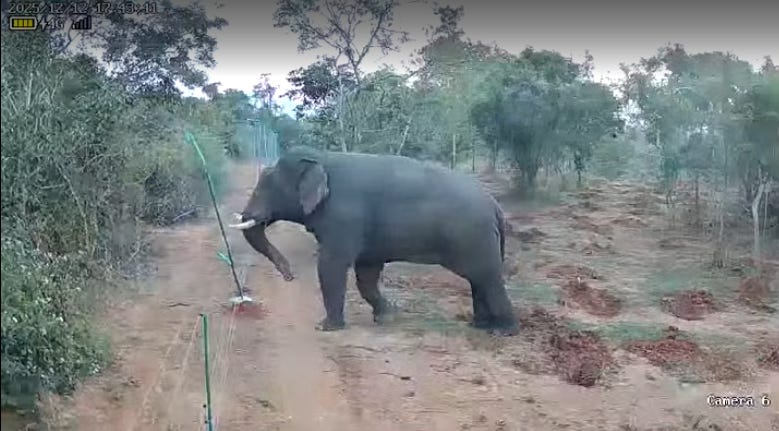
There’s an elephant at the boundary of our restoration site. Not a metaphor—a real one, navigating the shrinking edge between wilderness and human expansion.
This is the truth we can no longer ignore: our economy falls apart without nature. It’s embedded within the biosphere. And we’re pushing the boundaries too hard, too fast. The evidence surrounds us—choked city air, contaminated rivers and food chains, the mountain ranges stripped bare. Climate risks are here, now, demanding action.
The elephant at our boundary knows something we’re finally learning: there is no boundary. The economy and the biosphere rise or fall together.
Building the Bridge Back
At Medius Earth, we’re engineering a different path forward—one where technology meets ecology, where science scales restoration, and where communities lead regeneration.
Our projects are about rebuilding ecosystems:
Regenerating Rajasthan, near Udaipur and Jaipur — Reversing land degradation through native afforestation across the Aravalli belt
Vaaranavanam, in between Bangalore and Chennai, Tamil Nadu — Removing invasive species and restoring elephant corridors in Tamil Nadu’s forests
Amrit Mahal Community Forest, near Bangalore, Karnataka — Transforming degraded pasturelands into thriving commons
For our existing partners, we provide the technology to track every hectare, measure real impact, and unlock operational efficiencies in restoration.
Updates and achievements from Q4 2025
Forbes India Recognition
We were featured among India’s Top 100 Startups in the printed edition of Forbes India, as part of Leap To Unicorn – Season 3, IDFC FIRST Bank’s flagship startup program in partnership with Moneycontrol and CNBC-TV18. Chosen from 6,300+ applications across the country, this recognition reinforces our commitment to building scalable, science-backed solutions for ecological restoration and climate resilience.


India’s First Public-Private partnership for land restoration in Rajasthan
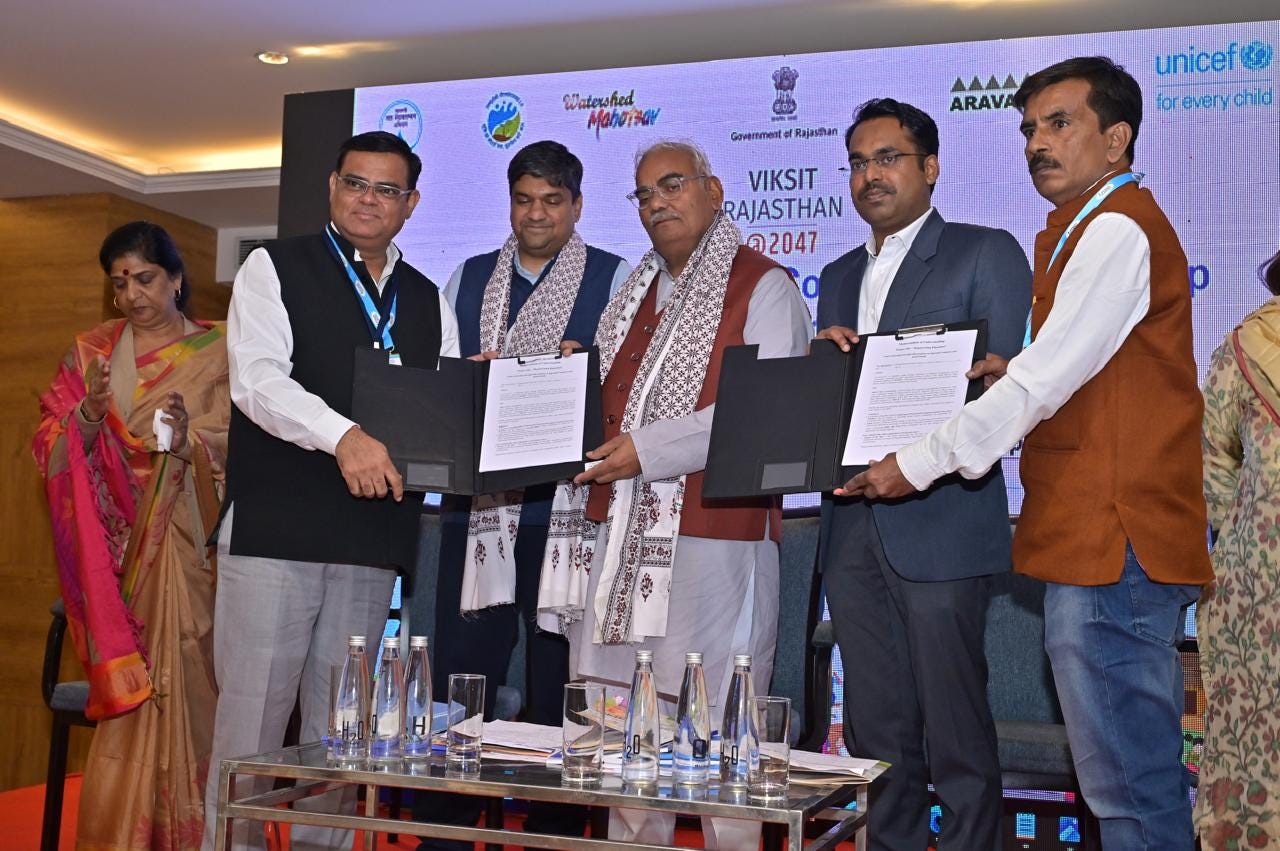
We’ve entered into a historic MoU with the Government of Rajasthan to establish a public-private model for land restoration across the state. This is a one-of-its-kind collaboration, combining government oversight with private sector execution for quality outcomes and rapid scaling. It means streamlined deployment, stronger accountability, and a replicable framework for restoration at scale.
Speaking at IIT Indore
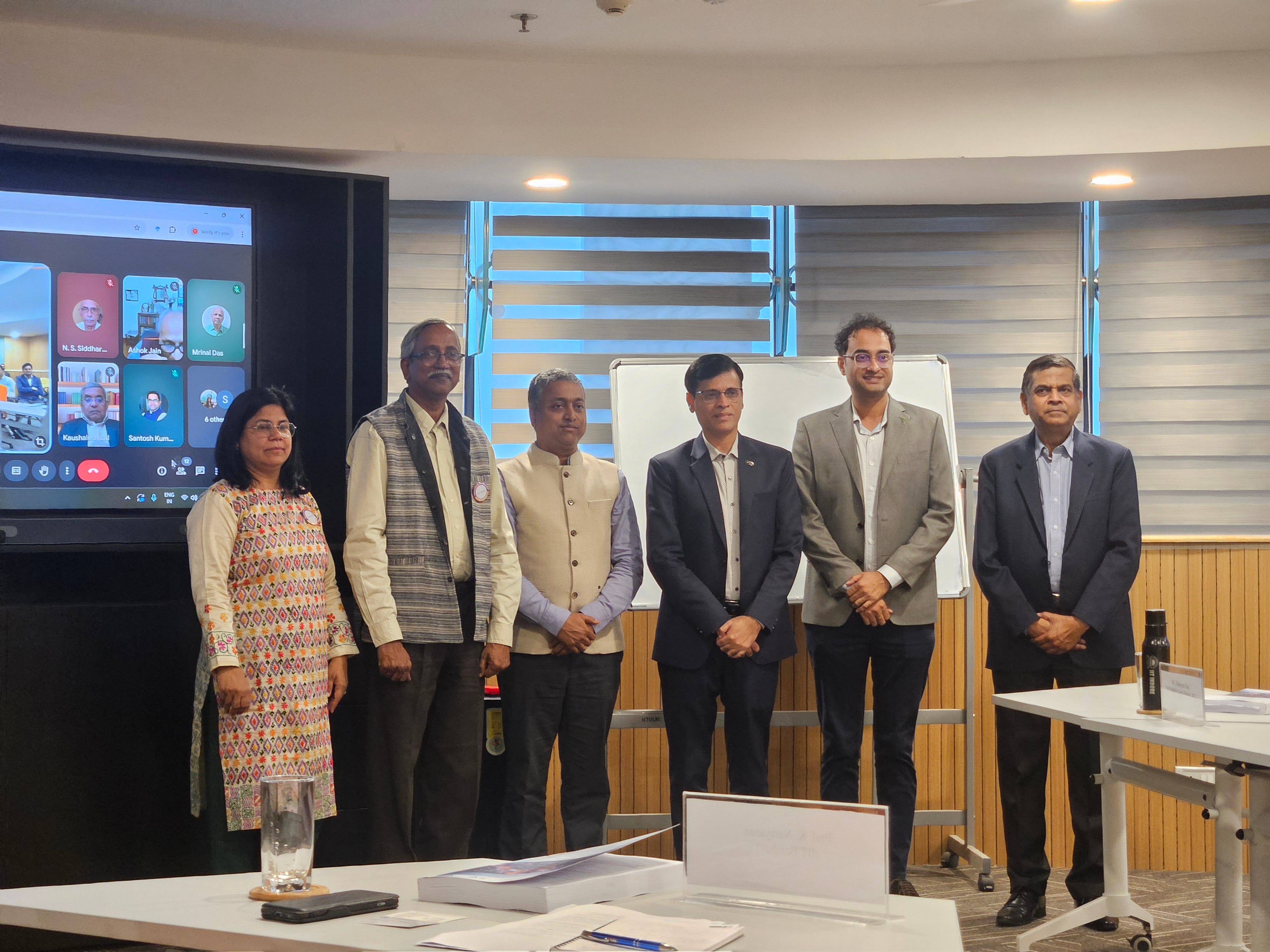
Presented at the Global Knowledge Forum Society’s Innovation and Economy conference, making the case to academics and researchers for why land restoration’s positive externalities matter—and why putting an economic value on nature isn’t optional anymore.
Team Update
Dr. Shreyans Gandhi has joined Medius as Head of Technology. He brings deep expertise in AI, embedded systems, and product development across ClimateTech, MedTech, and AgriTech. He has a stellar track record leading large engineering teams, building scalable products, modernizing legacy systems, and taking complex technologies from concept to deployment—exactly what is required to scale a restoration operating system. Dr. Gandhi is a Ph.D and B.Tech from IIT Bombay.
From the news — COP30 (Belém, Brazil)
Launch of the Tropical Forests Forever Facility (TFFF)
A major initiative aimed at providing long-term, predictable financing for the conservation of tropical forests.Strengthened Indigenous Participation
Greater recognition of Indigenous leadership and participation in climate negotiations, reinforcing their role as key stewards of forests and biodiversity.Declaration on Information Integrity on Climate Change
Launched on 12 November 2025 at COP30, the Global Initiative for Information Integrity on Climate Change unveiled a declaration establishing shared international commitments to counter climate disinformation and promote accurate, evidence-based climate information.Climate Finance Shortfalls
While the $1.3 trillion annual finance goal signals progress, current trajectories suggest global climate finance may reach only about $427 billion per year by 2035—less than one-third of the target. The commitment of “at least” $300 billion annually by developed countries by 2035 falls far short of developing-country expectations, deepening trust deficits and tensions around equity and responsibility.Absence of Leadership from Major Emitters
The leaders of the world’s largest emitters—China’s President Xi Jinping, India’s Prime Minister Narendra Modi, and U.S. President Donald Trump—were notably absent. This lack of high-level political leadership weakens the summit’s ability to secure ambitious commitments from the countries most responsible for global emissions.
Before we take your leave — These global financial shortfalls and gaps in adaptation funding underscore the need for nations to develop innovative and scalable mechanisms to mobilize capital for their growth and development while also meeting NDCs and SDGs. Medius is actively working through the GALLOP Initiative to help design an institutional solution that can support countries in addressing this challenge. More on this to follow later in 2026.
Wishing all of you a very Happy New Year from the team at Medius!
Ready to move beyond talk?
Let’s design your next restoration project or decarbonization pathway. Reach out to explore how Medius Earth can accelerate your climate commitments with integrity and impact.
The Operating System for Restoration
Medius Earth powers credible climate solutions with a complete infrastructure: digital MRV systems, high-integrity project design, community ownership models, and access to institutional capital. Our standards are rigorous because nature doesn’t accept half-measures. The outcomes are tangible—regenerated landscapes, restored water cycles, strengthened communities.
For organizations ready to decarbonize, we deliver the technology layer and strategic roadmap to transition credibly toward net-zero.